Finding Treasure at the Flea Market
Founder of the MADE finds video game artifacts while browsing through items at the Laney Flea Market
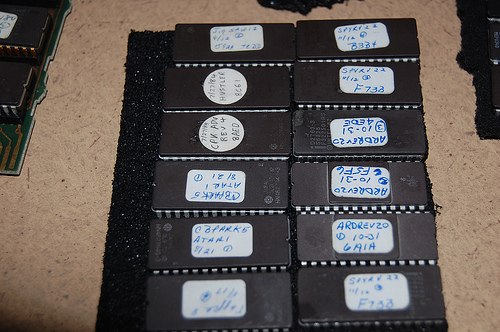
Alex Handy, a video game journalist, discovers a collection of EPROMs for the Atari and Colecovision at the Laney College flea market. More importantly, they hold various revisions of the games at different stages of their development.
The MADE's First GDC
MADE Brings Its Collection to GDC the First Time in 2011
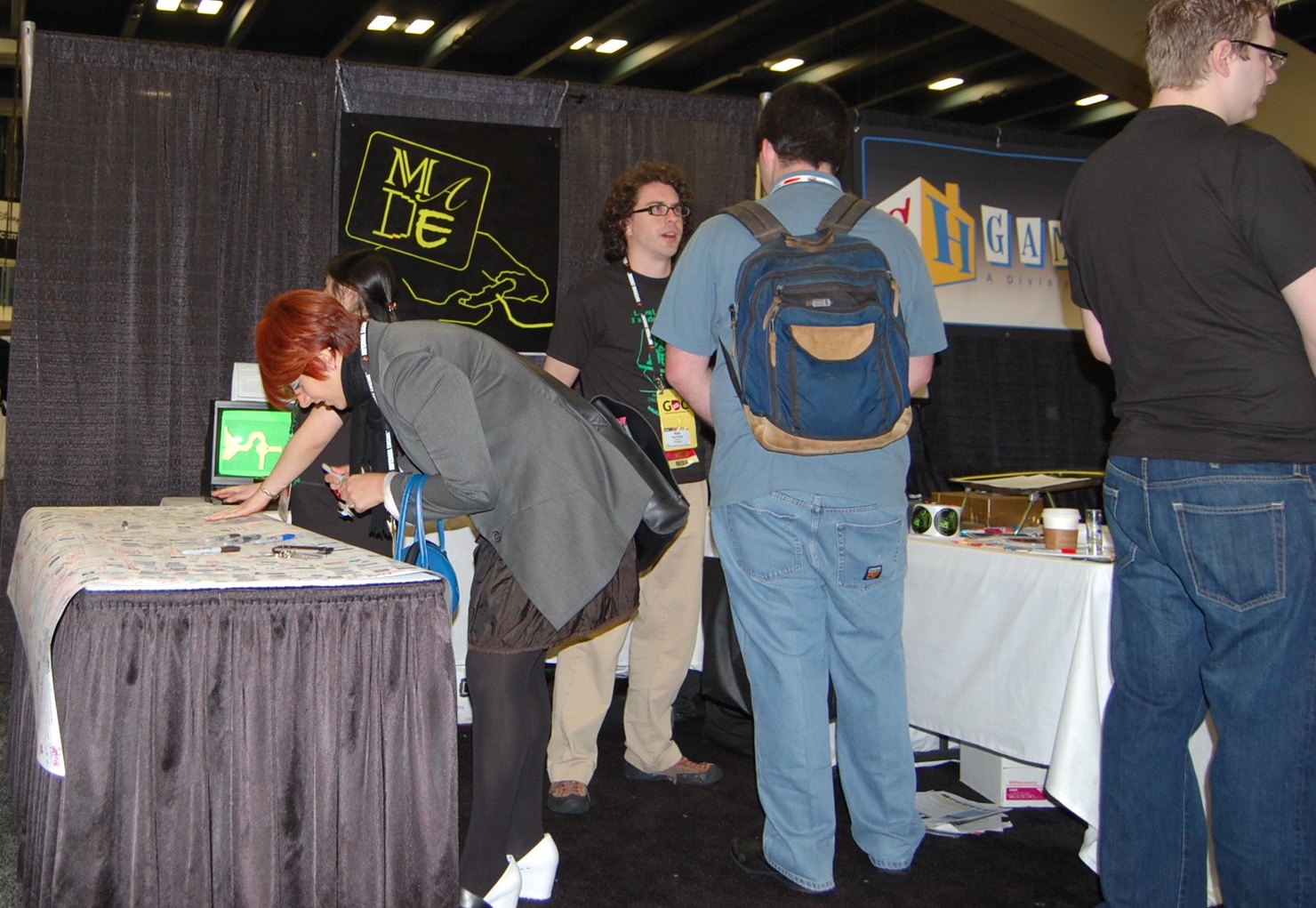
Volunteers exhibit the start of the museum's collection at GDC to advertise their first Kickstarter. The MADE prints and displays a large poster outlining the lineage of video game companies in the industry, and professionals sign next to the places where they've worked.
MADE Searches for Home
MADE community begins scoping out a home in San Francisco
Their initial target for the museum is a space at 3rd and Market, former site of William Hearst’s offices and the site of Chronicle’s original printing presses.
A Home is Found
Talking with City Officials Leads to a Museum Location
The MADE approaches at the time City Council member, and now former mayor Libby Schaaf to secure a location for the museum. They direct the museum to Phil Tagami's space at 610 16th Street, and the museum enters into a lease agreement to rent out the second floor of the space. They share their floor with other non-profits, such as the Mongolian Cultural Center, and local court-mandated anger-management and parenting classes. They end up entertaining and teaching kids from the parents of all three services. IDG Media donates the GamePro Collection, as that magazine shuts its doors after 20+ years of continuous publication. IDG donates the entire collection of equipment and games from that magazine’s illustrious 20+ year history to the MADE. It now forms the basis of our collection.
MADE Has Its Grand Opening
The museum opens with a 3D exhibit, talks, and free Scratch programming classes for kids
The MADE opens with a 3D exhibit, a talk by RJ Mical, and free Scratch programming classes for kids. Will Wright, the creator of Sim City donates to the museum, and his wife Anya, joins the board of directors. The MADE’s oldest group, the Interactive Fiction Club, holds its first meeting, first Saturday of the month. These meetings continue to this day.
Digital Restoration Work Begins
Beyond GamePro TV episode uploads, the MADE begins work on restoring the world's first graphical MMORPG.
The MADE begins work on its first act of digital preservation, beyond the uploading of lost 1996 GamePro TV episodes to YouTube. The MADE, in partnership with Chip Morningstar, F. Randall Farmer, and Fujitsu, undertook the preservation of Habitat, the world’s first graphical MMO, originally released in 1986 for the Commodore 64.
Digital Restoration Leads to Collaboration
Work on digital restoration spurs collaborations with the gamedev community and academic and legal institutions
The MADE works with the EFF, Stanford, MIT, Archive.org and many game developers to change copyright law. This exemption allows players to circumvent digital copyright protection when online game validation servers have expired, allowing online validation servers of single-player games to be circumvented so players can continue to play the games they’ve paid for long after the companies behind them have expired.
Ceiling Collapse Necessitates a Move
MADE is forced to move and launches its second Kickstarter
The ceiling collapses in the MADE’s classroom at 610 Jefferson St. in Oakland. No one is hurt, as it is after hours, but it is clear the MADE needs to move. The MADE launches its second Kickstarter to move into a 4000 square foot ground floor retail location. It achieves its $50k goal, and its volunteers get to work preparing the new space at 3400 Broadway in downtown Oakland. The Museum moves into its new location in a single day thanks to the hard work of its volunteers and fans.
The Museum Reopens
MADE reopens at 3400 Broadway
The museum reopens its doors to the public at its new location at 3400 Broadway, resuming all previous events, exhibitions, and classes. Neohabitat, the effort to digitally preserve Habitat, is released to the general public. Today, that game is once again playable online after an almost 30 year absence. It can be played for free online at neohabitat.org. All related source code is open sourced under the MIT license.
COVID Shuts Down the MADE
Museum closes its Doors Due to COVID
The MADE is forced to close down due to the COVID pandemic and the ensuing shelter in place orders from the local and federal government. Volunteers continue to remain connected through Slack and impromptu Minecraft servers.
Museum Moves into Temporary Storage
Unable to negotiate terms with the landlord, the MADE goes into storage
After arriving at an impasse with its new landlords, the MADE begins moving its collection into a temporary storage location in West Oakland. Video game documentary creators NoClip feature the museum in one of their videos, helping to raise awareness and fund for the museum to weather the COVID storm.
MADECast Airs Its First Episodes
To continue its mission, the MADE goes virtual with a new podcast
Museum volunteers start the MADECast, a podcast that features discussions on video game development, play, and preservation with luminaries across a wide swath of digital entertainment content topics. Guests include Tim Schafer, Ron Gilbert, Roberta Williams, and the MADE’s volunteers. The podcast continues today with the help of Jedd Goble.
MADE Returns to the Community
As restrictions begin to lift, the MADE brings video games to community activations
The MADE exhibits in East Oakland's Little Saigon district for a summer festival. The event included COVID testing from Asian Health Services, fun cultural activities for children, and worked to invigorate businesses within the community.
MADE Finds Its Third Home
After community activations and a soft relaunch of some programming, the museum finds its post-COVID home
The MADE secures a lease agreement with EBALDC (East Bay Asian Local Development Corporation) to reopen at 921 Washington Street. Volunteers begin to move everything out of storage in West Oakland, accomplishing this task within a month.
Playable Video Game Preservation Comes Alive Again
The MADE re-opens post-COVID
The MADE hosts its reopening party one month after starting its lease. The producer of Diablo attends the reopening party and signs a copy of Diablo on the shelf and tells stories about its production. Over a hundred visitors attend.